Normal HbA1c but High Blood Sugar? Here's Why It Happens
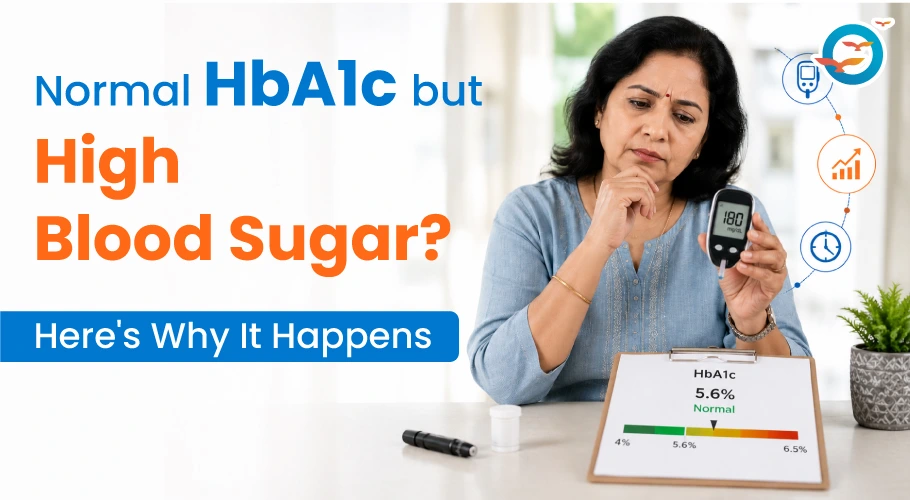
You finally receive your HbA1c report, and the number looks perfectly normal. Relief sets in. But a few days later, your glucometer shows fasting sugar above target or a sharp rise after meals. It can be confusing if your HbA1c is normal, why is your blood sugar still high?
The answer lies in understanding what each test measures. While HbA1c is an excellent indicator of long-term glucose control, it doesn't capture every blood sugar fluctuation. Looking at both tests together gives a much clearer picture of your metabolic health and whether you're maintaining healthy blood sugar levels.
What Does HbA1c Measure?
HbA1c measures the average amount of glucose attached to your red blood cells over the past two to three months. Unlike a glucometer reading, which reflects your glucose level at a single moment, HbA1c provides a long-term overview of your blood sugar control.
However, an average can sometimes hide important details. You may spend part of the day within the blood sugar normal range and experience large spikes after meals that don't significantly change your average HbA1c.
That's why doctors often interpret HbA1c alongside your fasting blood sugar levels and post-meal glucose readings.
Why Can Blood Sugar Be High Even When HbA1c Is Normal?
- You May Be Having Post-Meal Sugar Spikes
One of the most common reasons is having normal HbA1c but post meal blood sugar high.
For example, your fasting sugar may remain around 90–100 mg/dL, but after lunch or dinner it could rise above 200 mg/dL before returning to normal. Since HbA1c reflects an average, these temporary spikes may not dramatically affect the final result.
Repeated post-meal spikes, however, can still place stress on your blood vessels and metabolism.
- Your Morning Sugar May Be Elevated
Some people experience high fasting blood sugar but normal HbA1c because of the "dawn phenomenon." Early morning hormones trigger the liver to release stored glucose before you wake up, causing fasting sugar to rise.
Poor sleep, stress, and early insulin resistance can also increase fasting blood sugar levels without immediately affecting HbA1c.
- HbA1c Doesn't Always Reflect True Blood Sugar
Certain health conditions can make HbA1c less reliable. Anaemia, recent blood loss, kidney disease, liver disease, or conditions that shorten the lifespan of red blood cells may produce misleading results.
In some cases, people may even have HbA1c high but fasting glucose normal, showing that HbA1c and glucose readings don't always move together. This is why healthcare professionals evaluate multiple tests rather than relying on a single number.
- Insulin Resistance May Be the Real Problem
Blood sugar abnormalities often begin long before HbA1c becomes abnormal.
When your body develops insulin resistance, glucose struggles to enter the cells efficiently. As a result, blood sugar may rise after meals or remain elevated in the morning despite an apparently normal HbA1c.
Most insulin resistance treatments focus on improving insulin sensitivity through a balanced diet, regular exercise, quality sleep, stress management, and maintaining a healthy weight.
Don't Rely on One Test Alone
A normal HbA1c is reassuring, but it doesn't always tell the complete story. Doctors often combine HbA1c with fasting glucose, post-meal blood sugar readings, symptoms, and, in some cases, Continuous Glucose Monitoring (CGM) to understand whether you're maintaining healthy blood sugar levels within the recommended blood sugar normal range.
Looking at these tests together helps detect blood sugar fluctuations early and allows for timely lifestyle or medical interventions.
Final Thoughts
A normal HbA1c doesn't always mean your blood sugar is under control. If your fasting or post-meal glucose readings remain high, don't ignore them. Understanding the complete picture, not just one laboratory value is the key to better diabetes management. By monitoring your blood sugar regularly and addressing insulin resistance early, you can make informed decisions that support long-term metabolic health.
FAQs
1. Is 230 sugar high after eating?
Yes. A blood sugar level of 230 mg/dL after eating is considered high for most people. Frequent post-meal readings at this level should be discussed with your healthcare provider.
2. Which is more accurate: fasting blood sugar or HbA1c?
Neither test is better on its own. Fasting blood sugar levels show your glucose at one point in time, while HbA1c reflects your average blood sugar over the previous two to three months. Together, they provide a more complete assessment.
3. Is fasting required for the HbA1c test?
No. Fasting for hemoglobin HbA1c testing is not required. The test can be performed at any time of the day.
4. What if fasting blood sugar is high but HbA1c is normal?
High fasting blood sugar but normal HbA1c may occur due to the dawn phenomenon, stress, poor sleep, early insulin resistance, or because HbA1c represents an average rather than individual glucose readings. Additional testing may be needed.
5. What causes high blood sugar but normal HbA1c?
Temporary post-meal spikes, early diabetes, insulin resistance, stress, illness, or conditions affecting red blood cells can all cause high blood sugar while HbA1c remains normal.
6. What does a normal HbA1c but high glucose mean?
A normal HbA1c with high glucose usually means your blood sugar fluctuates significantly during the day. Since HbA1c is an average, it may not capture these short-term spikes.
7. Which is more accurate: HbA1c or a blood sugar test?
Each test serves a different purpose. HbA1c measures long-term glucose control, while blood sugar tests show your current glucose level. Using both together provides the most accurate understanding of diabetes control.