Overeating & Fasting: The Belly Fat Trap
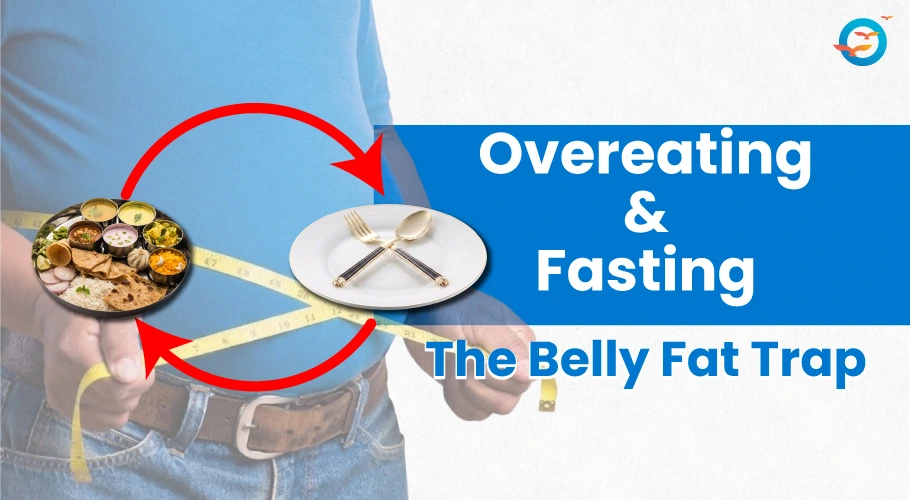
Many people follow a familiar pattern overeating one day and then using fasting to “correct” it the next. This cycle of overeating and fasting feels logical, especially with the popularity of intermittent fasting for weight loss. But in reality, this approach often backfires.
Instead of improving health, it can increase belly fat, slow metabolism, and disrupt how the body uses energy. The problem is not just overeating or fasting it is the way they are combined without structure.
What Happens When You Overeat?
When you overeat, especially foods high in sugar and refined carbohydrates, your insulin levels rise sharply. This pushes excess energy into fat storage.
The body prioritizes storing this energy in the abdominal area, leading to gradual fat accumulation. Over time, repeated overeating becomes one of the main psychological reasons for overeating and drives long-term metabolic imbalance.
Why Fasting Alone Doesn’t Fix Overeating?
There is a common belief that fasting can cancel out overeating. However, this is not how the body works.
The combination of intermittent fasting and binge eating creates instability. After overeating, fasting does not simply “burn off” excess calories. Instead, the body shifts into a conservation mode, protecting fat stores.
This is why fasting for weight loss without correcting eating patterns often fails to deliver sustainable results.
The Real Problem: Feeding Fat and Starving Muscle
The biggest issue with the overeating and fasting cycle is how it affects body composition.
- During overeating, excess calories are stored as fat
- During fasting (without exercise), the body breaks down muscle for energy
This creates a harmful pattern: you are feeding fat while starving muscle.
Over time, this leads to reduced muscle mass, slower metabolism, and increased belly fat even if body weight does not change significantly.
Why Belly Fat Increases With Age?
As metabolism slows with age, the body becomes less efficient at handling excess calories. Even if your weight remains stable, fat begins to accumulate around the abdomen.
Factors like stress, irregular eating habits, and poor lifestyle choices contribute to what causes overeating and make fat storage more likely.
The Missing Link: Exercise Gives Direction
The body needs direction to decide where to use or store energy. Without that direction, excess calories are stored as fat.
Exercise provides that signal.
- Strength training helps build and preserve muscle
- Cardio improves calorie utilization
- Yoga supports recovery and hormonal balance
Even 30 minutes of activity, 3–4 times per week, can significantly improve metabolism. This is one of the most effective ways to get help with overeating and improve energy balance.
How to Break the Overeating–Fasting Cycle?
To stop this cycle, focus on structure instead of extremes:
- Avoid compensating overeating with fasting
- Maintain consistent eating patterns
- Include regular exercise
- Focus on long-term metabolic health
This approach is far more effective than chasing the fastest way to lose weight, which often leads to temporary results.
Conclusion
The cycle of overeating and fasting is not a solution, it is a hidden cause of fat gain and muscle loss. Without exercise and structure, it leads to poor metabolic health.
Instead of relying only on fasting, shift your focus to building muscle, improving consistency, and giving your body the right direction.
Real transformation does not come from extremes. It comes from balance, structure, and sustainable habits.
Do you want to read more about visceral fat and why weight loss alone isn’t enough? Visit our blog.
FAQs
-
What happens when you overeat?
Overeating causes insulin spikes, leading to excess calories being stored as fat, especially around the abdomen. -
How to recover after binge eating?
Return to normal eating patterns, stay hydrated, and avoid extreme fasting. Focus on balanced meals and light activity. -
What happens when you eat too much and too fast?
It leads to poor digestion, higher calorie intake, and rapid fat storage due to insulin spikes. -
What is it called when you binge eat then starve?
This pattern is often referred to as a binge-restrict cycle, which can harm metabolism and eating behavior. -
What is the psychology behind people who eat fast?
Eating fast is often linked to stress, habit, or lack of awareness, which can lead to overeating. -
What to do after you overeat?
Avoid guilt or extreme restriction. Resume balanced eating and include light movement like walking. -
Fasting after a binge is harmful. Here's why.
Fasting after overeating can slow metabolism and increase muscle loss instead of burning fat.
8. How to reset after overeating?
Focus on consistent meals, hydration, and regular activity rather than drastic fasting.