Why Sugar Cravings Hit Right After Eating & How to Fix It?
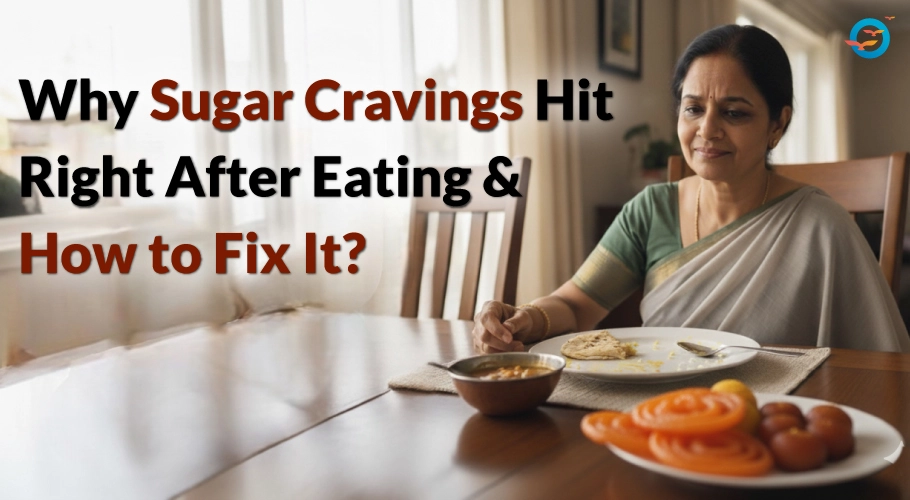
You finish a meal feeling full yet the mind immediately wants “just a bite” of something sweet. Almost everyone experiences sugar cravings after lunch or dinner, but very few understand real reasons behind these food cravings. The urge feels emotional, but the science behind sweet cravings is surprisingly biological involving taste buds, hormones, blood sugar levels, and even brain chemistry.
Once you know what’s causing sweet cravings after meals, you can break the cycle without feeling deprived or fighting your willpower.
Why You Crave Something Sweet Right After Eating?
Most people assume sweetness cravings are just a habit, but the truth is far more layered. Your body triggers these cravings because:
- Carbohydrates activate sweetness receptors on the tongue
- Insulin rises quickly, then blood sugar levels drop, and cravings begin
- Dopamine and serotonin (a key brain chemical) seek a “reward signal”
- The brain wants a contrast taste after a savory meal
- Emotional fatigue, stress, and poor lifestyle habits trigger comfort-eating circuits
This is why even after a full meal, many say, “I can’t stop eating sweets.” The craving comes from physiology, not a lack of discipline, and is often linked to metabolism and glucose regulation.
Epigenetic Taste-Bud Changes: A Hidden Trigger
A surprising insight explains a lesser-known cause: starting meals with roti or rice changes how taste buds behave. When carbohydrates hit the tongue first, they trigger a temporary epigenetic change that heightens the desire for sweetness for up to 72 hours.
This makes sugar craving feel stronger right after meals, and the effect repeats every time carbs come first especially in people managing diabetes or unstable blood sugar levels.
Fix the First Bite: The Most Powerful Habit to Reduce Cravings
Changing the order of your meal is one of the most effective ways to reduce sugar cravings naturally and improve your diet and metabolism.
Here’s the recommended sequence:
- Start with salad
- Then the fiber-rich vegetables (sabzi)
- Taste dal independently (good protein source)
- Eat roti or rice last
This pattern slows glucose absorption, stabilizes insulin, and reduces the sweetness signal that fuels sweet cravings and food cravings.
If you’ve ever searched how to stop sugar cravings without giving up your favourite foods, this is one of the simplest and most effective lifestyle tips to begin.
A Morning Trick That Makes a Big Difference
A small portion of natural fruit in the morning supports your energy levels and gives the brain’s reward system a gentle start. This reduces the intensity of sweet cravings after meals later in the day.
Many people notice that their urge to snack on sweets drops significantly when they eat fruit early, especially if they often feel, “I can’t stop eating sweets in the evening.”
This simple habit also supports better glucose balance and metabolism.
Choose Smarter Sweets When Cravings Hit
If cravings feel too strong to ignore, switch don’t suppress. One of the easiest replacements is: 1 date + 2 almonds (the date–almond sandwich)
It satisfies sweetness while providing fiber and healthy fats that prevent a spike. This approach is more sustainable than resisting or relying on refined sugar.
If you’re exploring how to get rid of sugar cravings without feeling restricted, natural alternatives are key.
Your Brain Also Plays a Role
Stress, poor sleep, and emotional fatigue often intensify cravings. Nutrient deficiencies can also be a hidden cause of cravings. Supporting the brain with stabilizing nutrients—nuts, berries, seeds, and leafy green vegetables—provides steady energy and supports healthy brain chemicals.
These foods improve metabolism, reduce sudden hunger, and help control food cravings.
Once your brain feels nourished, cravings automatically reduce.
Conclusion
Sweet cravings after meals are not weakness; they’re a predictable response shaped by taste buds, hormones, blood sugar levels, and your overall diet and lifestyle habits.
With small changes like adjusting the first bite, eating fruit earlier in the day, choosing natural sweet options, and reducing excess sugar consumption, you can retrain your body and mind.
Over time, the craving softens, your energy stabilizes, and you regain control naturally and effortlessly.
Do you want to know about How to reduce sugar and fat? visit our blog.
FAQs
-
Why do I get sweet cravings after meals?
Because taste-bud activation, insulin shifts, changes in glucose, and brain reward pathways combine to create strong sugar cravings post-meal. -
How can I stop sugar cravings naturally?
Start meals with salad and vegetables, include protein, eat carbohydrates last, and follow consistent healthy diet habits.
-
What should I eat when I can’t stop eating sweets?
Dates with almonds provide natural sweetness, healthy fats, and help control blood sugar levels.
-
Does meal order affect sweet cravings?
Yes. Starting with carbohydrates increases sugar cravings by affecting glucose metabolism.
-
Which foods help reduce cravings fast?
Fiber-rich vegetables, nuts, seeds, fruits, and balanced meals with protein and controlled carbohydrate consumption.
-
Are sweet cravings emotional?
Both. Stress, nutrient deficiency, and changes in brain chemicals can amplify cravings.
- Can high carbohydrate meals increase sweet cravings after eating?
Yes, high carbohydrate consumption can spike blood sugar levels quickly, followed by a drop, which triggers sugar cravings.
8. Is there a link between gut health and sugar cravings?
Yes, an unhealthy gut microbiome can increase cravings for sugary foods by influencing digestion and brain signals.