Eating Home-Cooked Food but Still Gaining Weight? Here’s Why
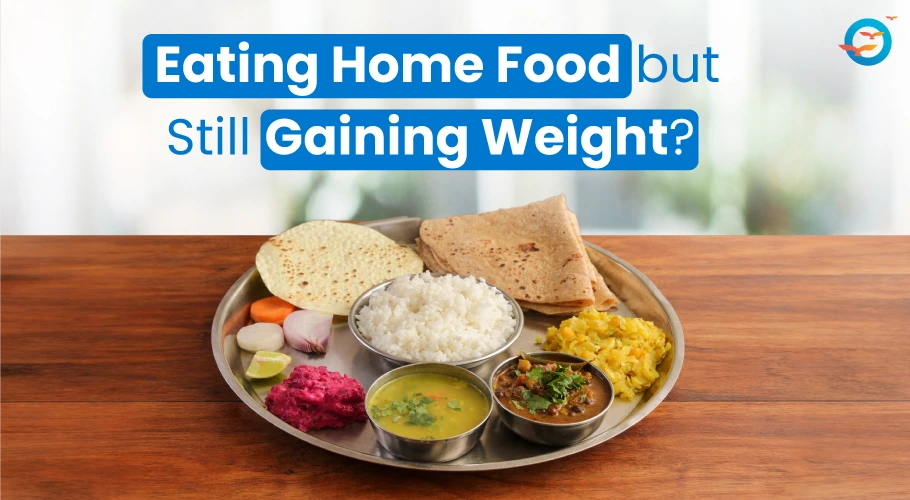
“I only eat home food. I don’t eat junk. So why am I still gaining weight?” This is one of the most common frustrations people experience after the age of 35. Many assume that home-cooked food automatically protects them from weight gain. But the truth is slightly different.
Weight gain is not just about what you eat. It is about how much your metabolism can afford to burn. This is where the concept of a calorie deficit becomes important.
To understand this, think of your body like a business. Every business has a top line and a bottom line. The top line is the total turnover, but the bottom line is the actual profit.
Food works the same way. Your top line is the total calories you eat, but the bottom line is what your body can actually burn through metabolism.
Why Weight Gain After 35 Is So Common?
When you are younger, your metabolism is naturally higher. Your BMR (Basal Metabolic Rate), the number of calories your body burns at rest is usually much stronger.
In your twenties, many people have a BMR close to 2000 calories per day. But as you reach your late 30s and 40s, this metabolic rate often drops to around 1700 calories per day.
This change is subtle, but powerful. A reduction of just 300 calories per day can slowly lead to weight gain after 35, even if you continue eating the same meals you always have.
The Hidden 300-Calorie Surplus
Let’s look at the numbers.
If your body burns 1700 calories but you continue eating 2000 calories, that extra 300 calories daily adds up quickly.
Over a year this becomes:
- 300 calories × 365 days is roughly more than or equal to 90,000 calories
- Which equals to around 9–10 kg of body fat
This is why so many people say: “I’m eating the same food but gaining weight.”
The real problem is not the food itself. The real problem is that your metabolism has changed.
Why Home-Cooked Food Can Still Cause Weight Gain?
Home food is healthier than processed food, but it is still possible to gain weight from it.
For example:
- Two rotis at lunch
- Two rotis at dinner
- Occasional rice
- Regular cooking oil
These eating patterns may have worked perfectly in your twenties. But when your activity drops and metabolism slows, the same meals may exceed what your body can burn.
This is where calorie management becomes essential.
The Simple Fix: Create a Calorie Deficit
You do not need extreme dieting to lose weight. In most cases, a small calorie deficit diet is enough.
A few simple changes can create a calorie deficit diet for weight loss:
- Reduce one roti per meal
- Avoid eating roti and rice together
- Slightly reduce excess oil or ghee
- Adjust portions gradually
These small adjustments can easily create a 300-calorie deficit, which is often enough to reverse gradual weight gain.
This is why many experts consider portion correction the best calorie deficit diet approach because it is sustainable.
The Bottom Line
Weight gain after 35 is rarely about eating junk food. In many cases, it happens simply because metabolism slows down while food habits remain the same.
Your body doesn’t need drastic dieting. It needs smart calorie management.
Sometimes a simple 300-calorie daily deficit is enough to reverse years of gradual weight gain.
When you start thinking about the bottom line of food, not just the top line, weight management becomes much easier.
Do you want to know why daily calorie counting fails for weight loss? visit our blog.
FAQs
1. Why am I gaining weight even when I eat home food?
You may be consuming more calories than your metabolism currently burns. Even healthy home-cooked food can cause weight gain if it exceeds your daily calorie needs.
2. Can home-cooked food still cause weight gain?
Yes. Portion size and total calorie intake matter. If calorie intake is higher than what your body burns, weight gain can occur even with home food.
3. What is BMR in weight loss?
BMR (Basal Metabolic Rate) is the number of calories your body burns at rest to maintain basic functions like breathing and circulation.
4. Does metabolism slow down after age 35?
Yes. Metabolism gradually slows with age, which means the body burns fewer calories than it did in younger years.
5. What is a calorie deficit diet?
A calorie deficit diet means consuming fewer calories than your body burns, allowing stored fat to be used as energy.
6. How can I increase my metabolism naturally?
Regular exercise, adequate protein intake, strength training, and proper sleep can help support metabolic function.
7. How can I lose body fat and gain muscle?
Combine strength training with a balanced calorie deficit diet and adequate protein intake to support muscle growth while reducing fat.
8. Why do hormones cause weight gain after 35?
Hormonal changes, including shifts in insulin sensitivity and metabolism, can influence fat storage and energy balance.
9. How many calories should I eat to lose weight?
This depends on your BMR, activity level, and body composition. Generally, a small daily calorie deficit helps promote gradual fat loss.
10. What is the best way to manage calories for weight loss?
The best approach is consistent calorie management through portion control, balanced nutrition, and sustainable lifestyle habits.