Fat as Fuel: How to Train Your Body to Burn Stored Fat for Energy
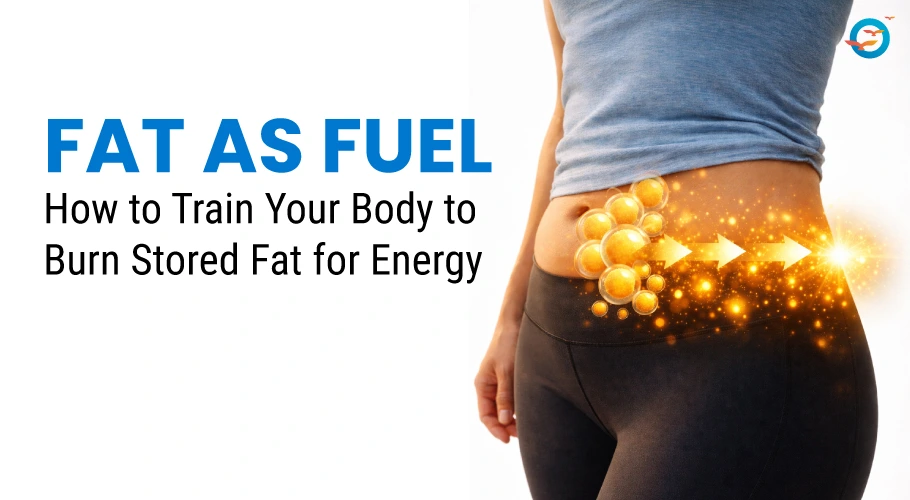
Most people feel hungry every few hours, even though their bodies store enormous reserves of fat. A person with 15–20 kilos of fat may be carrying more than 1,50,000 calories in storage yet the body keeps asking for food. Why does this happen? The answer lies in how the body chooses between fat as fuel and food as fuel.
Once you understand this process, natural fat loss, reduced hunger, and stable energy become much easier.
Why Your Body Holds Energy But Still Feels Hungry?
Humans were designed to function using stored fat. But today’s eating patterns, frequent meals, snacking, and high-carb diets have trained the body to depend on food as the primary energy source.
This creates metabolic inflexibility, making it hard for the body to:
- Burn fat efficiently
- Maintain stable energy
- Reduce hunger naturally
Instead of tapping into the stored reserves, the body keeps demanding more food and stalls the fat burning metabolism.
What Is Fat Adaptation?
Fat adaptation is the state in which the body naturally uses stored fat for energy throughout the day. When fat adaptation improves:
- Hunger drops
- Energy becomes stable
- Cravings decrease
- Mood and focus improve
Your metabolism begins to prefer fat as fuel, leading to smoother fat burning and better control over appetite.
This shift is central to how to burn fat naturally without extreme diets or complicated routines.
How Fasting Trains the Body to Use Fat as Fuel?
Fasting is one of the most powerful tools to retrain the metabolism. During a fast, when no new energy enters the system, the body is forced to switch to fat.
Here’s what happens:
- 12 hours: liver glycogen begins to drop
- 18–24 hours: the body enters deeper fat burning
- 24–48 hours: fat becomes the dominant fuel source
This is why extended fasting benefits include stronger fat oxidation, lower insulin levels, and better metabolic flexibility.
For beginners, it’s best to start slow. Fasting for beginners can be as simple as:
- 12-hour fasting window
- Gradually expanding to 14–16 hours
- Then exploring intermittent fasting for beginners like 16:8
Over time, the body becomes more comfortable using fat as fuel.
When Does the Body Burn the Most Fat?
The metabolic switch happens once the body’s quick energy (glucose) reduces. A 24–48 hour fast creates the strongest fat-burning environment. This is when the body deeply activates the fat fuel metabolism it was designed to use naturally.
Foods That Support the Fat-As-Fuel Process
Once you break your fast, food choices matter. Certain foods help the body burn fat more efficiently, such as:
- Vegetables rich in fiber
- Lean protein sources
- Healthy fats (nuts, seeds, coconut, avocado)
- Spices like ginger, cinnamon, and turmeric
These foods that increase metabolism and burn fat support fat adaptation and keep hunger low between meals.
Avoiding constant snacking helps your body stay in fat-burning mode longer.
How Fat Adaptation Reduces Hunger Naturally?
Once the body re-learns how to use fat, hunger becomes less frequent and less urgent.
You may feel:
- Longer satiety
- Fewer cravings
- Better focus
- More stable energy
This is the metabolic freedom the body is engineered for.
Conclusion
Your body already carries more than enough energy. Training it to use fat as fuel through fasting, smart food choices, and metabolic awareness gives you freedom from constant hunger and helps you burn fat naturally. With consistency, the body shifts from food dependency to genuine metabolic flexibility unlocking better health and long-lasting energy.
Curious about fasting and blood pressure? Can skipping meals really replace BP medicines? Read our blog.
FAQ’s
1. What is fat adaptation and how does the body shift from food to stored fat?
Fat adaptation happens when low insulin and longer gaps between meals push the body to use stored fat instead of constant food energy.
2. How long does fat adaptation take?
Usually 2–6 weeks, depending on fasting frequency, diet quality, and reducing snacks.
3. When does the body start burning fat during a 24–48 hour fast?
Fat burning starts around 12–18 hours, becomes strong by 24 hours, and dominates between 24–48 hours.
4. How does metabolic flexibility reduce hunger?
A flexible metabolism switches easily to fat, keeping energy stable and reducing hunger spikes.
5. Can beginners use intermittent fasting to become fat adapted?
Yes. Start with 12–14 hours, gradually move to 16 hours as the body adjusts.
6. Which foods boost metabolism and support fat as fuel?
High-fiber veggies, proteins, healthy fats, and spices like ginger, cinnamon, and turmeric.
7. How much fat can the body burn during fasting?
It varies, but the body can burn hundreds of calories of stored fat daily, depending on insulin levels and activity.