Is Multigrain Atta Really Healthy? The Truth You Should Know
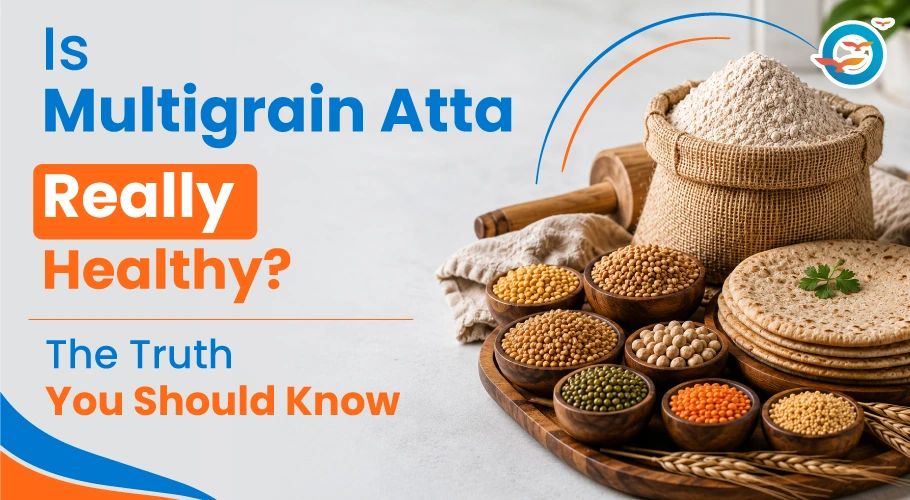
“Switch to multigrain atta. It is healthier.”
This is one of the most common pieces of advice people with prediabetes or diabetes hear. But is multigrain really the better choice for blood sugar control?
Many people switch from regular flour to packaged multigrain atta thinking they are making a healthier decision. However, in some cases, this change can work against their goals. Understanding what is actually inside your flour matters more than simply choosing a “multigrain” label.
Is Multigrain Good for You?
The answer depends on what type of multigrain flour you are choosing and how your body responds to it.
Multigrain simply means a mixture of different grains. It does not automatically mean low-carb, diabetes-friendly, or better for blood sugar.
Most commercially available multigrain atta contains around 70–80% wheat, with small amounts of other grains like ragi, jowar, oats, or barley added to it. While these grains may sound healthier, combining multiple grains does not always improve their impact on blood sugar.
For people with insulin resistance or diabetes, the quality, quantity, and processing of carbohydrates matter more than the number of grains in the packet.
Multigrain vs Whole Grain: What Is the Difference?
Many people confuse multigrain and whole grain wheat flour.
Whole grain wheat flour is made from the entire wheat kernel, including the bran, germ, and endosperm. This helps retain more fiber and nutrients.
Multigrain flour contains multiple grains, but these grains may not always be whole grains. Some products can also be finely processed, which makes digestion faster and may lead to quicker glucose spikes.
So, when comparing multigrain vs whole grain, the label alone does not tell the complete story. The processing method and actual grain composition are equally important.
Why Can Multigrain Atta Raise Blood Sugar?
One common misconception is that adding more grains automatically makes flour healthier.
However, if your body already struggles to manage carbohydrates, adding multiple grains together may increase the overall carbohydrate load.
Some grains used in multigrain atta, such as ragi and jowar, can have a higher glycemic response compared to wheat depending on processing and preparation methods.
Another important factor is grinding. Many packaged flours are finely milled. The finer the flour, the faster it can be digested, potentially causing quicker blood sugar rises.
This is why multigrain flour for blood sugar management may not always provide the expected benefits.
Side Effects of Multigrain Atta You Should Know
For some people, regularly consuming multigrain atta may lead to:
- Faster blood sugar fluctuations due to high carbohydrate content
- Digestive discomfort when multiple grains are difficult to digest
- Reduced mineral absorption due to compounds like phytates
Phytates can interfere with the absorption of minerals like calcium, magnesium, iron, and zinc. Over time, poor nutrient absorption may contribute to fatigue or weakness in some individuals.
What Should You Eat Instead?
For people with diabetes or prediabetes, eating one suitable grain at a time may be a better approach. This allows you to understand how your body responds to that particular grain.
Instead of blindly switching to multigrain atta, focus on:
- Choosing minimally processed flour
- Including adequate protein with meals
- Adding vegetables and fiber to slow glucose absorption
- Monitoring your blood sugar response after meals
Grains can also be combined with pulses or dals to improve the overall nutritional balance of a meal.
Conclusion
Multigrain atta is often marketed as a healthier choice, but more grains do not always mean better health. For blood sugar control, the focus should be on digestion, processing, portion size, and your body’s response.
Before making a switch, understand what works for your metabolism rather than following every “healthy” food trend.
Choosing the right flour can make a difference in managing blood sugar. Explore our guide to the best flour for diabetes to compare healthier flour options.
FAQs
1. Is multigrain atta good for people with diabetes?
Not always. While some multigrain products contain nutritious grains, many are still high in carbohydrates and finely processed. For people with diabetes, blood sugar response depends more on the type of grains, processing, and portion size than the "multigrain" label.
2. What is the difference between multigrain and whole grain?
Multigrain vs whole grain refers to two different concepts. Multigrain means the product contains more than one grain, whereas whole grain means each grain retains its bran, germ, and endosperm. A multigrain product is not necessarily made from whole grains.
3. Which is healthier: multigrain flour or whole wheat flour?
There is no universal answer. Whole grain wheat flour is often less processed and may provide more consistent fibre. The healthier option depends on ingredient quality, processing, and your health condition.
4. What is the glycemic index of multigrain atta?
There is no single glycemic index because it varies depending on the grains used and how the flour is processed. Finely milled flours generally produce a higher blood sugar response.
5. Can multigrain atta raise blood sugar levels?
Yes. Like any flour made from cereals, multigrain atta can raise blood sugar. The rise depends on the carbohydrate content, particle size, meal composition, and individual insulin sensitivity.
6. Are there any side effects of eating multigrain atta regularly?
Possible side effects of multigrain atta include faster blood sugar spikes if the flour is highly refined and, in some cases, reduced mineral absorption due to naturally occurring phytates when consumed in large amounts over time.
6. Is multigrain atta better than single-grain flour for blood sugar control?
Not necessarily. For some individuals, especially those with diabetes, eating one minimally processed grain at a time may be easier to tolerate than consuming multiple grains together.
7. What should you check before buying multigrain atta?
Read the ingredient list carefully. Look for the percentage of each grain, avoid highly refined flour, choose minimally processed options, and don't rely solely on front-of-pack marketing claims.