Is Samak Rice Good for Diabetes?
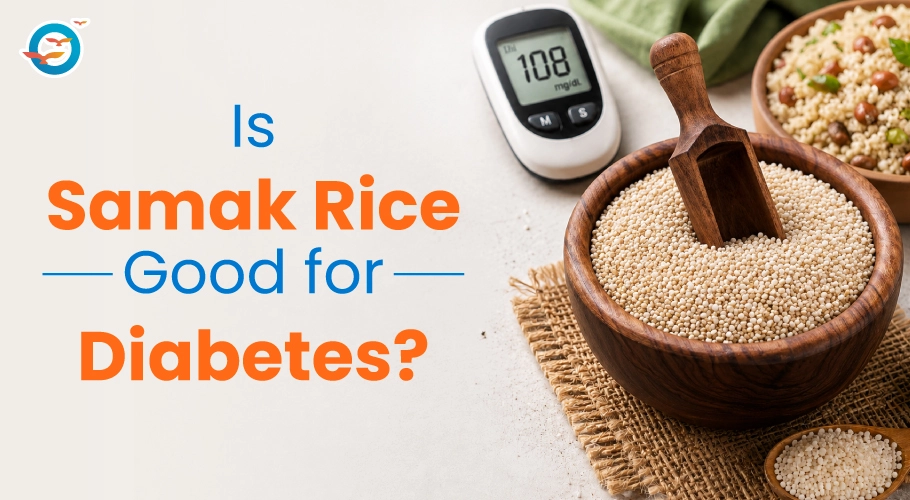
Diabetes hai, toh kya vrat mein samak ke chawal kha sakte hain?
Samak rice is a widely eaten food during fasts in many Indian homes and is sometimes referred to as barnyard millet, Bhagar, or Vrat ke chawal. It is generally seen as a healthier substitute for ordinary rice. However, does that fact automatically mean it is appropriate for people with diabetes?
The short answer is yes. Samak rice can be included in a diabetes-friendly diet, but portion size, how it is cooked, and the overall meal matter just as much as the grain itself.
What Is Samak Rice?
If you're asking what samak rice is, it isn't rice at all but a kind of millet called barnyard millet. In various parts of India, it is also known as sama, Bhagar, Samak ke chawal and Vrat ke Chawal.
Samak rice is consumed during religious fasts and is a common food in a great many Indian homes when observing Vrat. Many people regard it as a healthier option than polished white rice, and the fibre and nutrients it contains are why health-conscious people often choose samak rice as part of a balanced diet.
How Does Barnyard Millet for Diabetes Compare to White Rice?
One of the main benefits of barnyard millet when it comes to diabetes is the amount of fibre it contains. Generally, barnyard millet has more fibre and a greater variety of micronutrients than polished white rice.
Samak rice contains carbohydrates, protein, fibre and minerals including iron and magnesium. Although exact amounts may differ by variety and preparation method, samak rice is generally regarded as more nutrient-dense than refined white rice.
Samak rice still contains carbohydrates and calories, and when people plan meals for someone with diabetes, they should consider both the calories and the carbohydrate content of samak rice.
What Is the Samak Rice Glycemic Index?
The samak rice glycemic index is generally considered lower than that of many refined grains, although values can vary by variety, processing method, and cooking technique.
A food with a lower glycemic index will tend to raise blood sugar more slowly. Yet the glycemic index alone is not enough to decide whether a food is appropriate for people with diabetes.
The body’s glucose response is influenced by:
- Portion size
- Total carbohydrate intake
- Fibre content
- Protein in the meal
- Individual metabolism
Therefore, foods with a somewhat lower GI can still affect blood sugar levels if eaten in large amounts.
How Can People with Diabetes Eat Samak Ke Chawal Safely?
The key to enjoying samak ke chawal is to eat it in moderation.
While samak rice offers several benefits for diabetes, it shouldn't be treated as a free food. Since it contains carbohydrates, eating large portions can still raise blood glucose levels.
To make your meal more balanced:
- Keep portions moderate
- Add plenty of vegetables
- Include a protein source such as curd, paneer, tofu, dal, eggs, fish, or chicken
- Limit excess oil and ghee
A well-balanced plate is often more important than the grain alone.
What Are the Benefits of Vrat Ke Chawal for People with Diabetes?
One of the main benefits of samak rice is that it can add variety to the diet while providing fibre and important nutrients.
For people who fast, Vrat ke chawal can be a better choice than highly processed fasting foods. However, the benefits depend on how the dish is prepared.
A simple vegetable samak khichdi is very different from a preparation loaded with potatoes, fried ingredients, peanuts, and excess ghee.
The goal should be to create a balanced meal rather than relying on samak rice alone for blood sugar management.
How Much Samak Rice Can a Person with Diabetes Eat?
No single serving size works for everyone.
The ideal portion depends on:
- Activity level
- Overall carbohydrate intake
- Blood glucose response
- Body weight goals
- The foods eaten alongside it
A practical way is to use samak as one part of the meal rather than making it the entire meal. Pairing it with vegetables and protein can help improve meal balance and satiety.
What Are Healthy Samak Rice Recipes for Diabetes?
Some diabetes-friendly ways to enjoy samak rice include:
Vegetable Samak Khichdi
Cook samak with plenty of vegetables and moderate amounts of oil or ghee.
Samak Pulao
Add mixed vegetables for extra fibre and nutrients.
Samak with Protein
Serve a moderate portion of samak alongside curd, paneer, tofu, dal, eggs, fish, or chicken.
Samak Vegetable Bowl
Combine cooked samak with vegetables and a protein source for a balanced meal.
Avoid turning healthy recipes into high-calorie meals by using excessive ghee, potatoes, fried ingredients, or oversized portions.
To Sum Up
So, is samak rice good for diabetes?
Yes, it can be. But remember, being a millet doesn’t automatically make it diabetes-friendly.
Focus on portion size, preparation, and the overall meal.
Samak is a smart choice when eaten wisely, not simply because it is samak.
FAQs
1. Is samak rice better than white rice for diabetics?
Samak rice generally contains more fibre than polished white rice and may have a lower glycemic response. However, both contain carbohydrates, so portion control is important.
2. Can I eat samak rice during fasting if I have diabetes?
Yes, you can include samak rice during fasting. Just avoid large portions and calorie-dense preparations made with excess potatoes, ghee, or fried ingredients.
3. Is samak rice good for weight loss and diabetes?
Samak rice can be part of a weight-loss diet when eaten in moderation. Pairing it with vegetables and protein can help create a more balanced meal.
4. What are healthy samak rice recipes for diabetics?
Vegetable samak khichdi, samak pulao, and samak bowls with vegetables and protein are good options. Keep oil, ghee, and portion sizes in check.
5. Is samak rice low in carbohydrates?
No, samak rice is not a low-carb food. It still contains carbohydrates and should be eaten in appropriate portions.
6. Is samak rice gluten-free?
Yes, barnyard millet is naturally gluten-free. However, people with celiac disease should watch for possible cross-contamination during processing.
7. Can samak rice help with weight management in diabetes?
It can support weight management when included in a balanced diet. Its fibre content may help with fullness, but overall calorie intake still matters.
8. Which is healthier for people with diabetes: samak rice or samak flour?
Neither is automatically healthier. The better choice depends on the recipe, portion size, and how the meal is balanced.