The Hormone Truth Behind Perimenopause Weight Gain
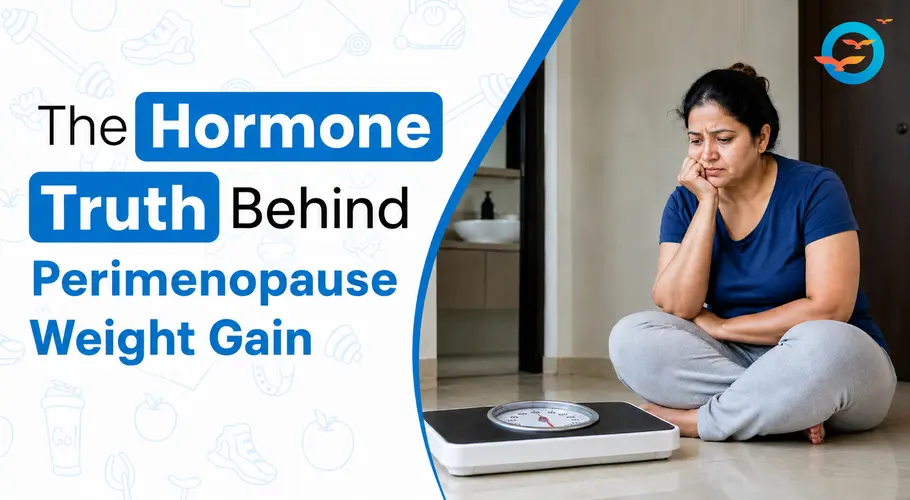
Going to the gym regularly, taking protein, and still noticing stubborn weight gain after 40?
You’re not alone. Many women feel frustrated when routines that worked in their 20s and 30s suddenly stop giving results.
The truth is simple: your food may not have changed, but your body has. As hormone levels fluctuate, metabolism slows down, muscle mass gradually declines, and fat storage patterns begin to shift. This is why many women experience perimenopause weight gain even when they are eating similarly and staying active.
Understanding these changes can help you make smarter decisions instead of simply working harder.
Why Weight Gain Happens After 40?
After 40, the body becomes less forgiving with excess calories and inconsistent routines.
Hormonal fluctuations, especially changes in estrogen, can affect:
- Fat storage
- Appetite regulation
- Muscle recovery
- Energy expenditure
This is why hormones after 40 and weight gain are closely linked.
Common signs include:
- Belly fat gain
- Slower fat loss
- Water retention
- Increased cravings
- Low energy
Many women also notice perimenopause weight gain and bloating, which can make weight gain feel sudden and confusing.
This is a common phase during hormonal transition, not simply a lack of discipline.
- Follow the “OR Rule”
One of the easiest ways to manage weight after 40 is following a simple principle:
Choose one, not both.
Examples:
- Main course or dessert
- Evening snack or protein shake
- Coffee treat or sweets
As metabolism slows, stacking calories becomes easier without realizing it.
This simple rule helps create calorie balance without strict dieting.
It can be especially useful for women experiencing rapid weight gain perimenopause often triggers.
- Focus on Energy vs No-Energy Foods
After 40, calorie awareness matters more than before. Instead of obsessing over carbs, fats, and protein, think about food as:
Energy-dense foods
These are easier to overeat:
- Desserts
- Fried snacks
- Processed foods
- Large portions of nuts
- Oversized protein servings
Lower-energy foods
These create fullness with fewer calories:
- Soups
- Salads
- Smoothies
- Vegetables
- Fruits
Balancing meals with lower-calorie foods supports weight management during menopause by naturally controlling intake.
Protein is important, but more is not always better. Excess calories from any source can still contribute to fat gain.
- Balance Exercise and Nutrition in Phases
Many people respond to weight gain by:
- Exercising harder
- Increasing protein intake
- Ignoring recovery
This often backfires.
Instead, think in cycles:
- Exercise-focused phases to build or maintain strength
- Nutrition-focused phases for fat loss and metabolic reset
This creates a more sustainable rhythm for body composition changes. You cannot out-exercise an imbalanced diet, especially after 40.
- Support Hormones With Smarter Nutrition
Nutrition becomes even more important during hormonal transitions.
Focus on:
- Protein-rich meals
- Fiber-rich vegetables
- Hydration
- Better sleep
- Stress management
Some women also explore:
- supplements for perimenopause weight gain
- natural supplements for perimenopause weight gain
- perimenopause sudden weight gain supplements
- herbs for perimenopause weight gain
However, supplements work best only when paired with consistent lifestyle habits.
Final Takeaway
If you are struggling with perimenopause weight gain, remember: Your body after 40 is different from your body at 25.
The solution is not always:
- more gym
- more protein
- more restriction
Instead, focus on:
- smarter calorie balance
- better food quality
- exercise and nutrition phases
- hormone-friendly habits
Small adjustments can make a huge difference in managing weight after 40.
Walking is a great way to stay active, but it may not be enough on its own for effective weight loss after 40. Are you interested to learn more? Discover why walking alone may not help you lose weight.
FAQs
1. Why am I gaining weight at 45 years old?
Hormonal changes, muscle loss, slower metabolism, and reduced recovery are common reasons.
2. Why am I gaining weight so fast at 30?
Stress, hormonal imbalance, poor sleep, insulin resistance, and lifestyle changes can all contribute.
3. What is a normal weight for a 35 year old?
A healthy weight depends on height, muscle mass, body composition, and metabolic health.
4. What is the unhealthiest body shape?
Health risks are influenced more by excess abdominal fat and visceral fat than body shape alone.