10 Proven Ways to Target and Burn Stubborn Belly Fat Fast
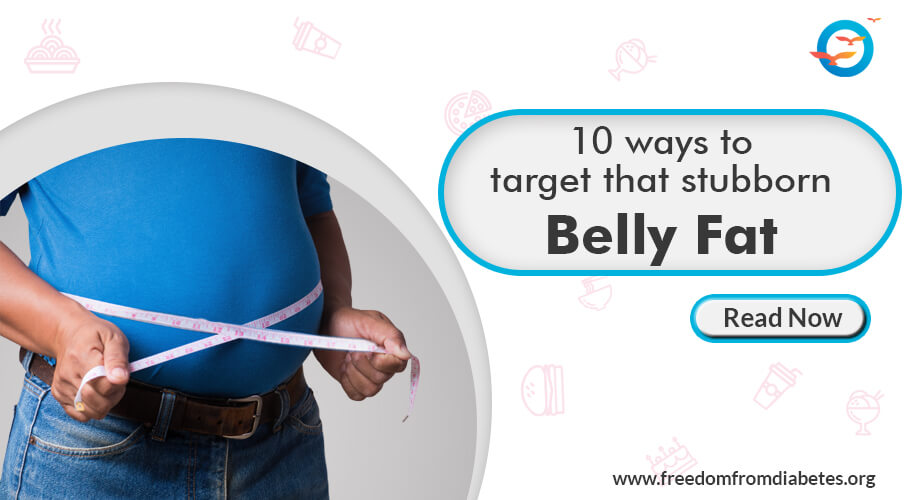
Spare tires, love handles, muffin top, all have one thing in common: they’re all euphemisms for belly fat—the one thing that most of us have suffered at some point or the other. And if you ask anyone they will tell you that it’s where they want to lose weight.
In fact, when people talk about weight loss, they mean fat loss, and usually the fat they’re referring to is belly fat. You may want it gone for aesthetic reasons, but belly fat is also a dangerous health condition. Carrying that excess fat around the abdomen puts you at high risk from lifestyle disorders like heart disease, high BP, diabetes and, even, some cancers.
From a health perspective as well as body aesthetics, losing this excess fat is imperative. But as most of us have found from experience, this isn’t easy. To help you attack this unsightly and dangerous mass, we’re put together a list of ten proven strategies that work. They can be divided into three broad categories: dietary, exercise, and stress management. All work, but for best results you need all three. And remember, consistency is the key. Belly fat is a common concern worldwide. In fact, about 67.3% of adults struggle with excess belly fat, making it one of the most challenging areas for weight management.
Fat loss tips that Work
It’s no coincidence that most of these belly fat tips are dietary in nature. After all, the fat came through your diet, so it’s only logical that the best ways to get rid of it are through your diet.
1. Eat lots of fiber-rich food
There are two types of fibre and both have a role to play in enabling fat loss. Soluble fibre, names thus because of its ability to absorb water, forms a gel-like substance that slows down the passage of food through your digestive system. It also improves the quality of beneficent bacteria in your gut.
The second type of fibre, insoluble fibre, doesn’t get digested in the body. But its presence induces a feeling of fullness that keeps you from eating any further, effectively reducing calorie intake. Make a real effort to include fibre-rich foods in your diet and you’ll soon see the difference in your belly. Eating more fiber can reduce abdominal fat. Regular intake of soluble fiber has been associated with significant reductions in visceral fat, the deep abdominal fat linked to metabolic diseases.
Some sources of fiber are-
- flax seeds,
- sprouts
- legumes
- berries
- leafy green vegetables
- cabbage
- cauliflower
- carrots
- beans
- apples
2. Avoid High-GI Foods
This is a no-brainer. Everyone knows, by now how dangerous sugary foods are for our health. This includes most confectionery, sugar, and sweet drinks—including fruit juices. These foods rank high on the GI scale—a measure of the speed with which the glucose in them is absorbed into the bloodstream, spiking insulin, which in turn converts the excess glucose into fat. Excess—and for many people, even moderate—consumption leads to a list of chronic diseases like type 2 diabetes, high BP, high triglycerides, obesity, and fatty liver. Belly fat is linked to higher health risks like diabetes. Reducing sugar intake aids in losing stubborn belly fat. Studies suggest that reducing sugar intake can significantly impact abdominal fat levels, with some findings showing a nearly 10.4% reduction in belly fat within a few months of lowering sugar consumption.
3. Avoid foods that contain fat—especially trans fats
All macronutrient (protein, fat, carbs) rich foods contain calories. But the similarity ends there. One gram of fat contains 9 calories, which is more than double the calories in a gram of protein or carbohydrate. So when you consume fat you’re simply pouring extra calories into your body. Calories that your body has no use for and will end up converting into fat.
Trans fats, which are created when saturated fats are hydrogenated, are especially bad. They have been linked to inflammation, heart disease, and insulin resistance. So make it a practice to read food labels, and stay clear of any products with hydrogenated or partially hydrogenated fat, which is how some unscrupulous manufacturers disguise trans fats.
4. Cut out or cut down on alcohol
Folks who like their tipple tend to quote studies that show the health benefits of alcohol. But bear in mind these benefits are not completely verified, and only effective when the consumption is small—no more than 330 ml of mild beers or a standard 30 ml measure of hard liquor or 150 ml of wine a day.
Alcohol is high in calories, and is known to lower inhibition—usually leading to over consumption, and carries many health risks. Studies have linked alcohol consumption to a significantly higher risk of central obesity, i.e. belly fat. So, if you must have a drink, don’t exceed a standard measure a day. Better, yet, cut it out completely.
5. Eat adequate protein
Protein is known to induce a feeling for fullness, which keeps us from reaching for an extra helping. It does this by inducing the release of a hormone, known as the fullness hormone.Protein also raises your metabolic rate—the rate at which you body burns calories.
Finally, protein contains branch chain amino acids, which are the building blocks of muscle mass. So eating sufficient protein will improve your musculature as well as control your body fat. Good sources of protein are beans, legumes, and pulses. While meat and dairy do have high protein content, they are also very high in fat, and so not recommended. Remember not to go overboard in your protein consumption though, excess of anything only ends up as fat. Combining strength training with cardiovascular exercise appears to deliver better results than either approach alone, helping many individuals achieve greater reductions in belly fat.
6. Drink more water
Water is a necessary ingredient for life itself. From a fat-loss perspective, there are many good reasons to quaff up. Water is a great hunger suppressant. Next time you feel hunger pangs, reach for the bottle (of water), and most of the time you’ll feel the hunger fade away. This is because the brain can’t distinguish between hunger and thirst. Often when you think you’re hungry, you’re just thirsty!
Water improves digestive function. And it is needed to metabolize fat, through a process known as lipolysis.
How much should you drink? This depends on many factors, such as age, level, the intensity of activity, temperature, and humidity. But as a general rule, adult males should drink at least three liters a day, and women, two liters.
While reducing belly fat, it's important to look beyond the weighing scale and focus on overall health indicators such as body mass index (BMI), waist circumference, cholesterol levels, and metabolic health. Excess abdominal fat can affect vital organs and increase the risk of insulin resistance, cardiovascular disease, and other chronic conditions. Making smarter meal choices by limiting added sugars and processed foods while increasing vegetables, lean proteins, and nutrient-dense foods can significantly improve nutrition and support healthy metabolism. Choosing water and other low-calorie beverages over sugary drinks also helps reduce unnecessary calorie intake. Combining these dietary habits with strength training improves muscle strength, endurance, and calorie burning capacity. Sustainable fat loss ultimately depends on maintaining balance, staying hydrated, and developing the motivation and discipline needed to consistently work toward your long-term health and fitness goals.
7. De-Stress
Stress plays a huge role in promoting fat gain. When you’re stressed the body releases a hormone known as cortisol—aka, the stress hormone. One side effect of this hormone is that it enhances the conversion of glucose into fat; it also increases appetite—a double whammy for weight watchers.
There are many ways to reduce stress, the easiest of which is to simply engage in activities that you find pleasurable. Get a hobby, and if possible, make it yoga, it’s a combination of meditative movement and physical exertion have a beneficial, calming effect. Meditation is another proven method to stress management. It’s easy and can be incorporated into the most hectic lives. All you need is a quiet spot and 15 minutes.
8. Sleep
If obesity is a growing urban phenomenon, so is lack of self, and the connection is not coincidental. Lack of self tends to trigger cortisol, which as we’ve seen leads to the body to increase fat production. Lack of sleep also creates food cravings, leading to the consumption of unhealthy foods.
Both of the above increase fat storage. To get a regular night’s sleep, try staying away from any screen for at least an hour before bedtime; don’t eat of exercise for at least two hours before sleep time, and set a sleep routine: bathe, pray, meditate, read…before you turn out the lights.
9. Get moving
Aerobic exercise, also known as cardio exercise, is one of the most effective ways of burning off fat. Aerobic means with oxygen, in other words, you’re performing your activity without gasping for breath. The opposite of aerobic exercise is anaerobic exercise, where you complete the movement—often the same movements as aerobic exercises—but without oxygen. Sprinting is an aerobic exercise: jogging or walking is aerobic. Both are good ways to burn belly fat, and you should ensure your routine includes some of both. Most people begin to notice a measurable reduction in waist size after several weeks of consistent diet and exercise rather than within a single week. Cardiovascular work helps reduce belly fat and high‑intensity interval training is particularly effective — some studies report abdominal fat falling by about 12.7% after a few weeks of regular HIIT. Meaningful, maintainable change usually comes from gradual lifestyle shifts you can stick with, so expect to see clearer tape‑measure or clothing differences over several weeks to a few months. Increasing soluble fiber is associated with less belly‑fat gain over longer periods (about a 3.7% smaller gain over five years per each extra 10 g of soluble fiber), and avoid relying on over‑the‑counter pills or supplements that claim quick results.
One way to do this is through High-Intensity Interval Training (HIIT). These are exercise routines that intersperse short-duration intense activity with lower intensity movements and rest periods. The effect is to keep your heart elevated for a longer period, facilitating higher fat burn. Some movements incorporated in HIIT workouts are jumping jacks, jump squats, high knees, and the granddaddy of they all: burpees. For cardio activities, you can try jogging, running, swimming, cycling, and many group activities.
Finish off your routine with some abdominal exercises. Although much has been said and written about the impossibility of spot reduction, ab exercises do help. For one thing, they tone your abdominals, effectively pulling your belly in. Planks, crunches, and leg lifts are great all-around ab toners.
10. Perform resistance training
While cardio movements help burn off glycogen, the effects only last as long as the exercise is being performed or, at max, an hour or so after you’re done. Resistance training, on the other hand, increases your metabolic rate for up to 24 hours after the session. This is because the body engages in the repair and maintenance of the muscles that have endured micro-stresses as a result of the resistance training. It goes without saying that every session should be intense enough to trigger this activity, aka: afterburn.
The second effect is that resistance training builds muscle and the more muscle you have the greater your body’s calorific needs. Translation: more muscle means more calorie burned—even at rest! Don’t like pumping iron. No problem. There are many movements that only use bodyweight and turn out results just as intensive. Pull-ups, pushups, triceps dips, jump squats… are all examples of everyday bodyweight exercises. Strength training builds muscle and boosts metabolism.
Conclusion
Belly fat is a huge problem for almost everyone. Factors like bad diets, sedentary lifestyles, lack of sufficient sleep, high stress levels, have contributed to larger waistlines the world over. High belly fat is also one of the biggest risk factors for lifestyle chronic diseases like diabetes, high BP, heart disorders, PCOD/S and, of course, obesity itself. While it is very difficult to target fat in the abdominal region, it is not impossible.
FFD’s weight loss programs have shown consistent results through our combination of diet, exercise and de-stressing activities. If you’re like to know how our programs can help you burn off those unsightly kilos and get back on the road to good health, Join our Discover Reversal Session