10 Blood Pressure Mistakes to Avoid When Checking BP at Home
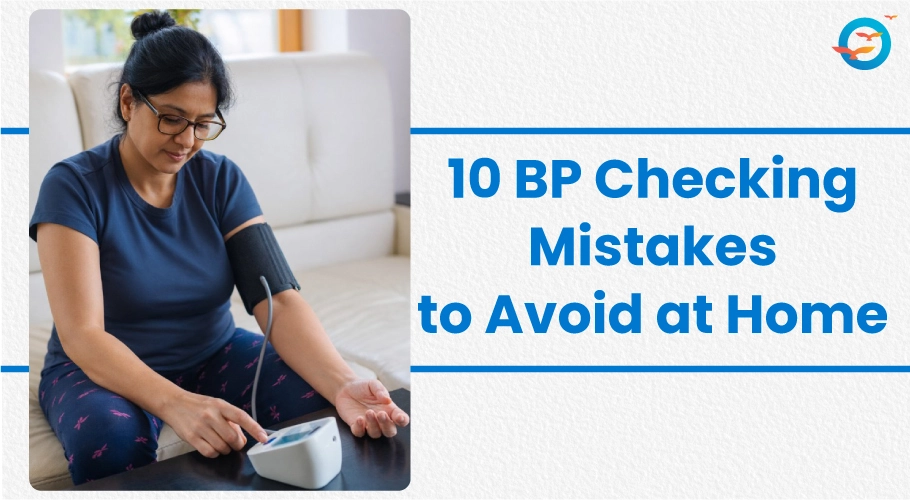
Checking blood pressure at home has become a common habit for people who want to monitor their health and detect hypertension early. Home monitoring can be extremely helpful, but only if the readings are accurate.
Many people unknowingly make small blood pressure mistakes while measuring BP. These errors can change the numbers on the machine and make your blood pressure appear higher or lower than it actually is.
If you practice BP checking at home, understanding the right method can make a big difference in getting reliable results.
10 Common Blood Pressure Mistakes People Make
Here are the most common blood pressure mistakes people make when checking BP at home.
-
Letting Your Feet Hang
Your feet should never hang freely while measuring BP. When your feet are not supported, blood circulation may change slightly.
Always sit with feet flat on the floor for accurate readings.
-
Crossing Your Legs
Crossing your legs or sitting cross-legged can temporarily increase blood pressure.
For proper BP checking at home, keep your legs relaxed and uncrossed.
-
Checking BP with a Full Bladder
A full bladder can slightly raise blood pressure levels.
Before measuring BP, it is best to empty your bladder to avoid this common measurement error.
-
Sitting Without Back Support
Many people sit stiffly while checking BP. This posture can activate muscles and affect reading.
Instead, sit comfortably with your back supported against the chair.
-
Placing the BP Cuff Over Clothing
Incorrect cuff placement for BP machines is one of the most frequent blood pressure mistakes.
The cuff should be wrapped directly around the bare arm, not over clothing. This allows the device to measure pressure correctly.
-
Wrong Direction of the Tube
Many people place the BP cuff tube outward.
The tube should ideally run along the inner side of the arm to align with the artery and improve measurement accuracy.
-
Arm Not at Heart Level
Your arm position plays a major role in accurate readings.
Your arm should be supported and kept at heart level. If the arm hangs down or is raised too high, the BP result may not be correct.
-
Talking During Measurement
Talking while measuring BP activates the nervous system and may temporarily increase blood pressure.
Stay quiet and relaxed during the measurement.
-
Drinking Tea or Coffee Before Checking BP
Caffeine from tea or coffee can temporarily increase blood pressure.
Avoid consuming caffeinated drinks for at least 30 minutes before measuring BP.
-
Checking BP After Stress or Exercise
Blood pressure naturally rises after physical activity or emotional stress.
Sit calmly and rest for a few minutes before measuring to avoid inaccurate readings.
How to Check Blood Pressure Correctly at Home
Accurate BP checking at home requires a calm environment and correct posture.
Follow these steps:
- Sit quietly for 5 minutes before measurement
- Keep feet flat on the floor
- Sit with back supported
- Place the arm at heart level
- Use proper cuff placement for BP machine
- Avoid talking during measurement
Following these steps helps reduce common blood pressure mistakes and ensures reliable readings.
How Many BP Readings Should You Take?
Doctors often recommend taking two readings instead of one.
Maintain a gap between two BP readings of about 5 minutes, then calculate the average. This provides a more accurate picture of your blood pressure levels.
Understanding Your Blood Pressure Numbers
Understanding BP numbers is important for blood pressure and heart health.
Ideal Blood Pressure
For most adults, the ideal blood pressure should remain below 130/80.
When the Upper Number Is High
If the upper number (systolic BP) increases, it may indicate stiffness or calcification of larger arteries, which commonly occurs with aging.
When the Lower Number Is High
A rise in the lower number (diastolic BP) may be linked to stress, insulin resistance, or tightening of smaller arteries.
When the Gap Between Numbers Is Too Large
If the difference between systolic and diastolic BP becomes too large for example 160/100 or 140/80 this may indicate pulse pressure over 60 points.
A large pulse pressure can increase the risk of heart complications and should be evaluated carefully.
Conclusion
Checking BP at home is a valuable tool for monitoring health. However, small blood pressure mistakes can easily lead to inaccurate readings.
Simple corrections such as proper posture, correct cuff placement, and avoiding caffeine before measurement can significantly improve accuracy.
When you follow the correct method for BP checking at home, you get reliable numbers that help you better understand your blood pressure and heart health.
FAQs
How do I check my blood pressure correctly at home?
Sit calmly for five minutes, keep your feet flat on the floor, support your back, place your arm at heart level, and ensure proper cuff placement before measuring BP.
What mistakes should I avoid while checking blood pressure?
Avoid crossing your legs, talking during measurement, placing the cuff over clothing, drinking caffeine beforehand, or measuring BP immediately after stress or exercise.
What is the correct position to measure blood pressure?
You should sit comfortably with your back supported, feet flat on the floor, and your arm resting at heart level.
Can crossing my legs affect my blood pressure reading?
Yes. Crossing your legs can temporarily increase blood pressure and may lead to inaccurate readings.
Should my arm be at heart level when checking blood pressure?
Yes. Keeping your arm at heart level helps ensure the BP reading reflects your actual blood pressure.
Can drinking tea or coffee affect blood pressure readings?
Yes. Caffeine can temporarily increase blood pressure, so it is best to avoid tea or coffee for at least 30 minutes before checking BP.
How many times should I measure blood pressure at home?
Take at least two readings with a five-minute gap between two BP readings and calculate the average.
What is the ideal blood pressure range for adults?
For most adults, an ideal blood pressure level is generally considered below 130/80 mmHg.
Also visit our blog- Natural ways to lower blood pressure