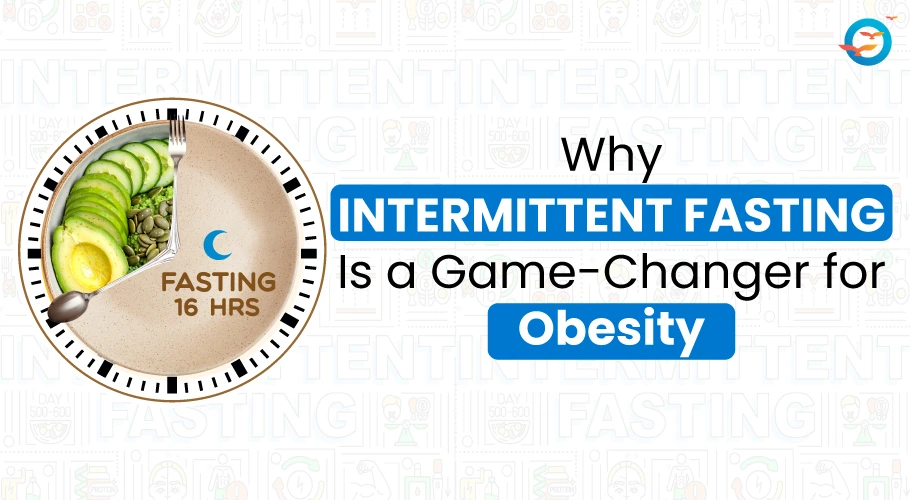
Why Intermittent Fasting Is a Game-Changer for Obesity?
For people above 100 kg, weight loss often feels like a constant struggle. Exercise feels exhausting, the gym feels intimidating, and hunger never seems to settle. This is not a willpower issue. It’s a metabolic reality.
In obese bodies, movement-based weight loss is often the hardest place to start. That’s why weight loss without exercise, when done strategically, works better and why an intermittent fasting plan for weight loss can be a powerful first step.
Why Obese Bodies Resist Exercise
When body weight crosses 100 kg, every movement becomes a load-bearing activity. Exercises that require carrying your own weight running, jogging, swimming, cycling are naturally resisted by the body.
In women especially, where body fat percentage can reach 35–40%, the muscles are already doing strength training all day just to keep you upright and moving. This constant effort explains two things:
- Why exercise feels unusually draining
- Why hunger never seems to switch off
Your body is already “working out” continuously.
The Hidden Reason You’re Always Hungry
Because muscles are under constant load, the body keeps demanding:
- Calories
- Protein
- Micronutrients
To meet this demand, most people eat frequently. But frequent eating comes at a cost.
Every time you eat, insulin rises. When insulin stays high all day, fat cannot be accessed or burned. This creates a vicious cycle:
- Constant hunger
- Frequent eating
- Persistently high insulin
- No fat loss
This is why many people feel stuck despite “eating carefully.”
Why Exercise Alone Doesn’t Solve the Problem?
In obese bodies, exercise without insulin control often backfires. The more you move, the more hungry you get. The more you eat, the higher insulin goes. And the higher insulin stays, the more fat gets protected.
This is why people often say: “I exercise, but I don’t lose weight.”; “I feel hungry all the time.”; “I regain whatever I lose.”
The issue is not effort. It’s insulin dominance.
Why Fasting Works Where Exercise Fails?
To reduce insulin, fat must be starved, not muscles.
Fasting does exactly that. When food intake pauses, insulin levels fall. When insulin falls, stored fat finally becomes accessible. This is why an intermittent fasting plan for weight loss works so well for obese bodies.
When fasting is done correctly:
- Hunger gradually settles
- Insulin suppresses
- Fat becomes the primary fuel
This allows fat loss with no exercise, especially in the early phase of weight loss.
Nutrition First, Then Insulin Control
The goal is not to starve the body. The goal is to flood the body with nutrition first adequate protein, micronutrients, minerals so hunger stabilizes.
Once nutrition is sufficient, fasting becomes easier. And once insulin drops, fat loss starts without forcing movement.
As weight reduces, the body becomes lighter. Only then does exercise become enjoyable and sustainable.
Conclusion: Start Where Your Body Cooperates
If you are obese, your body is not asking for harder workouts. It is asking for lower insulin.
Trying to exercise your way out of obesity often leads to frustration, injury, and burnout. Learning to fast strategically and safely changes your relationship with hunger, food, and fat.
Weight loss doesn’t begin in the gym for obese bodies. It begins by giving insulin a break.
Once that happens, everything else finally starts working.
FAQs
1. Can you lose weight without going to gym?
Yes. Weight loss is driven by insulin and metabolism. Fasting can trigger fat loss even without gym workouts.
2. Can I lose weight if I don’t exercise at all?
Yes, especially in the beginning. Many obese individuals lose weight through fasting before adding exercise later.
3. Is fasting good for weight loss if I am obese?
Yes. Fasting helps lower insulin levels, which allows stored fat to be used for energy.
4. Why do I feel hungry all the time when I am overweight?
Excess body weight keeps muscles working constantly, increasing hunger signals and calorie demand.
5. Does frequent eating cause weight gain?
Frequent eating keeps insulin elevated, which blocks fat burning and promotes weight gain.
6. Does fasting reset metabolism?
Fasting improves metabolic flexibility by shifting the body from sugar burning to fat burning.
7. Why does my body crave food all the time?
High insulin levels and insulin resistance drive constant hunger and cravings.
8. Can fasting help burn stored fat?
Yes. When insulin drops during fasting, the body can access and burn stored fat.